Qualitative research
24+ interviews and targeted surveys with government officials to identify friction in document verification and approval flows.
Case Study
A full-service UX transformation for municipal procedures focused on accessibility, transparency, and operational speed.

100%
Paperless migration
The objective was to simplify complex municipal procedures into a digital service that is faster and easier to understand for both citizens and officials.
Discovery phase
Research combined interviews and service walkthroughs to define where the current process was failing users.
24+ interviews and targeted surveys with government officials to identify friction in document verification and approval flows.
Fragmented data sources, absent real-time status updates, and legal language complexity blocked service efficiency.
Definition phase
The architecture phase mapped service dependencies and established scalable data foundations.
The delivery model connected research, design, and validation through iterative cycles.
Mapped current procedures and documented recurring bottlenecks in manual operation paths.
Built a clear, accessible interface model adapted to multiple user skill levels and workflows.
Tested with citizens and internal staff to improve reliability, comprehension, and decision speed.
UX and architecture analysis
The internal platform improved request tracking, service response, and operational visibility.
Streamlined operational handoffs
Higher data integrity and traceability
Scalable service architecture
Two interfaces focused on reducing procedural errors and improving real-time service operations.
A guided review workflow for descriptive documents helped teams validate legal and technical requirements before approval.
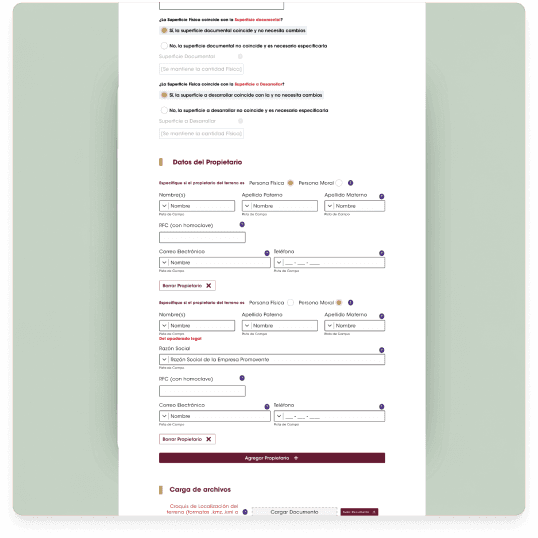
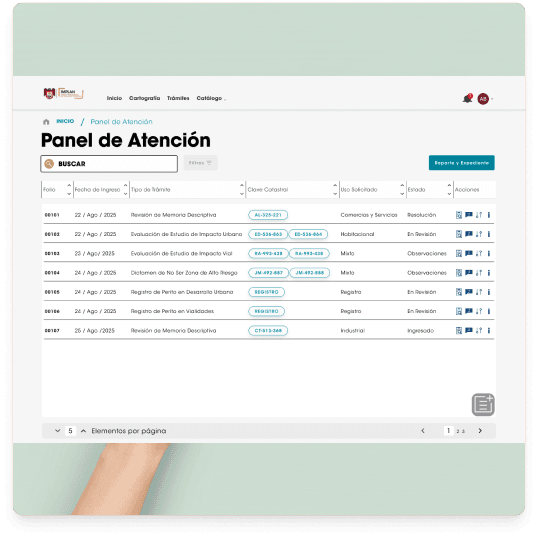
A central operational panel for tracking requests, managing appointments, and coordinating updates across teams.
The project reinforced how research quality and design-system rigor directly affect public-service outcomes.
Balancing legacy requirements with modern UX standards requires precise prioritization and tradeoff management.
Accessible language, feedback, and structure are essential for broad public-service adoption.
A modular design system accelerated implementation and improved consistency across future expansions.
Let's collaborate
I work with teams that need rigorous research, clear information architecture, and scalable design execution.